At its core, a product demo is a tour of your product—what it does, how it works, and why someone should care. For sales and marketing teams, these demos are a crucial part of the toolkit, making it possible to explain even the most complex solutions in a way that’s easy to follow. This guide explains how to create interactive demos that convert, with a special focus on how AI can superpower your sales process.
From Static Slides to Dynamic Stories

Let's be honest: the product demo is often the make-or-break moment in a sales cycle. For too long, sales teams conducted demos by clicking through a rigid slideshow, reciting a script that was the same for every prospect. This one-size-fits-all monologue rarely hit the mark, leaving potential customers bored and feeling like their specific problems weren't heard.
But today's buyers have completely different expectations. They don't want to sit back and be lectured; they want an experience built for them. This shift has forced sales and GTM teams to rethink their demo strategy, moving away from dull presentations and embracing dynamic, personalized storytelling.
The Rise of Interactive and AI-Powered Demos
The first big leap forward was the move to interactive demos. Instead of just watching a video, prospects could now click through a simulated version of the product on their own time. This hands-on, self-guided tour lets them get a real feel for the software, creating a sense of ownership long before a purchase is made. It turns a passive presentation into an active experience.
Now, we're seeing the next wave: AI Demos. This technology takes the interactivity from an interactive demo and dials it up a notch with intelligent, automated personalization. An AI-powered demo can instantly customize the experience for every single viewer. Imagine a prospect seeing their own company name, logo, and industry-specific data right inside your product demo—all without a sales rep lifting a finger.
This isn't just a fleeting trend. It's a direct response to a market that demands personalized solutions, not generic sales pitches. By adopting AI and interactivity, GTM teams can finally stop just listing features and start showing real, tangible value.
Why This Matters for Modern Sales Teams
This evolution from static to dynamic is crucial for improving how sales are conducted. The market's obsession with video isn't a secret. The global video production market, which includes video product demos, was already worth around USD 70.40 billion back in 2022 and is expected to explode to nearly USD 746.88 billion by 2030. You can dig into more of these market growth insights from Grand View Research.
This massive growth highlights a fundamental change in how businesses need to communicate. For sales teams, embracing interactive and AI-powered demos really means:
Saving Time: AI support for sales automates personalization, so reps can stop doing repetitive prep work and focus on what they do best: building relationships and closing deals.
Increasing Relevance: Every prospect gets a story that actually connects with their unique pain points and goals.
Improving Engagement: Interactive features keep people clicking, exploring, and learning, holding their attention far longer than a static video ever could.
Ultimately, these modern demo tools help you tell a product story that’s compelling because it adapts to each individual prospect. That’s how you set the stage for better conversations and, in the end, more closed deals.
Why Interactive Demos Win More Deals
What if you could let a prospect test-drive your software without needing a salesperson or a single line of code? That's the real magic behind an interactive demo. It completely flips the script, moving from a one-sided presentation to a hands-on, active experience. And honestly, that simple shift makes all the difference in closing deals.
When a prospect gets to click around and explore for themselves, something powerful happens. They're not just passively watching a video; they're actively engaging with the product. This creates a sense of ownership and a much clearer understanding of how it could solve their problems. They're not just being told how a feature works—they're discovering it on their own, leading to those 'aha!' moments that a standard video just can't deliver.
The numbers back this up in a big way. We already know that video demos work. In fact, studies show that 89% of consumers say they’ve been convinced to buy a product after watching a video. But when you layer in interactivity, you pour gasoline on the fire, turning casual viewers into genuinely interested buyers. You can see more data on how video influences buying decisions for a deeper dive.
The Psychology of Putting Prospects in Control
Think about a traditional video demo. It’s a one-way street, forcing every single viewer down the exact same path. But here’s the thing: not every prospect cares about the same features. Interactive demos let them choose their own adventure, so they can focus on the parts of your product that are most relevant to their unique pain points.
This self-guided journey does more than just keep them engaged; it builds serious confidence. They get to prove the product's value to themselves, which is a thousand times more convincing than any sales pitch you could ever give. It’s the difference between hearing a car has great handling and actually getting behind the wheel to feel it for yourself.
By guiding users through key workflows and embedding clear calls-to-action, you create a smooth, frictionless path from initial curiosity to genuine interest. Each click reinforces why your solution is the perfect fit, making the follow-up sales conversation feel like a natural next step.
This infographic really drives home the performance jump you get when you move from passive videos to interactive experiences.
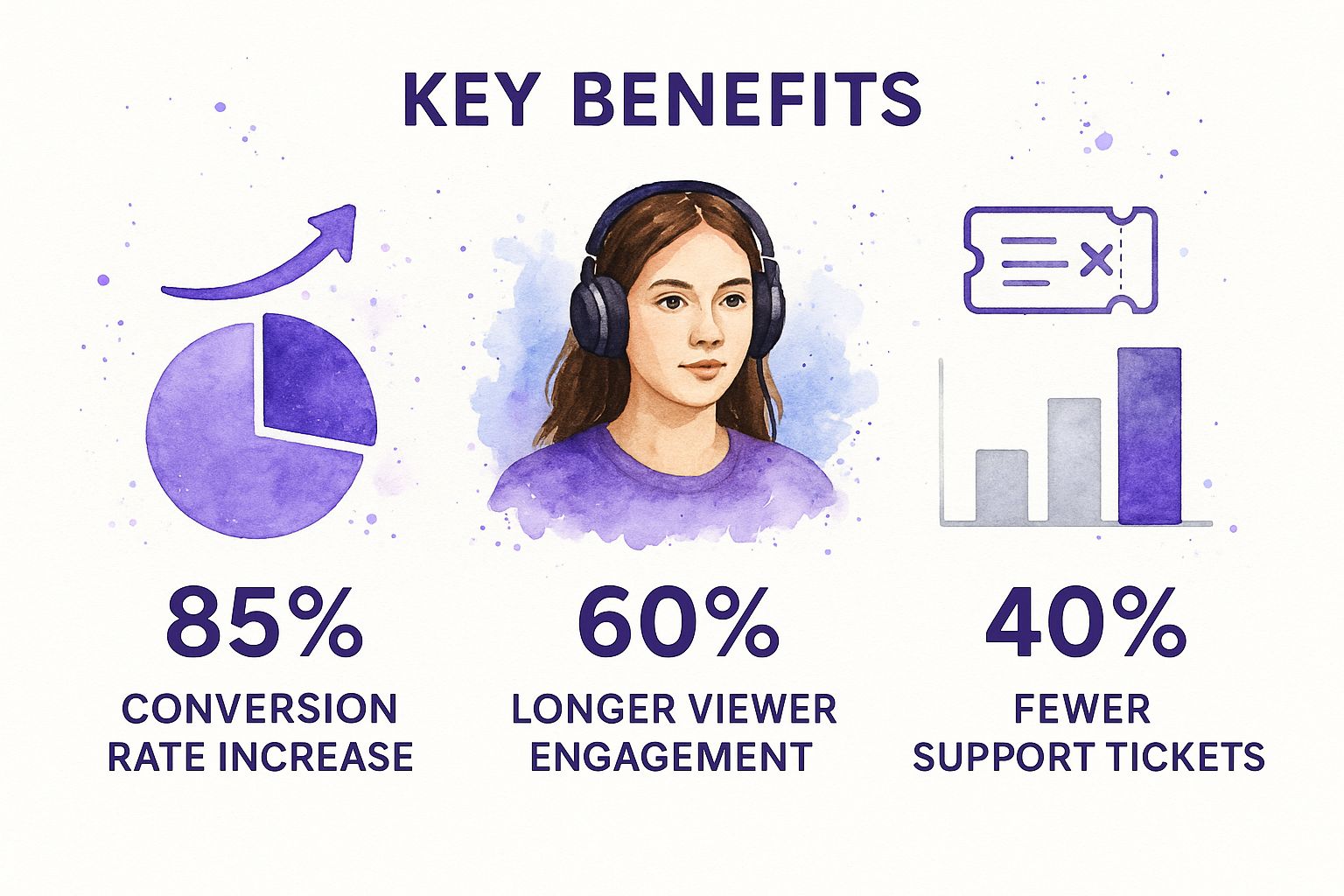
As you can see, interactive demos don't just offer a slight bump in metrics. They create massive advantages across the entire funnel, from grabbing attention early on to reducing the support load later.
To make the distinction even clearer, let's break down the core differences between a standard video and a hands-on interactive demo.
Comparing Passive Video Demos and Interactive Demos
Attribute | Passive Video Demo | Interactive Demo |
|---|---|---|
Engagement | Viewer is a passive observer. They watch a pre-recorded path. | User is an active participant. They click, explore, and control the experience. |
Personalization | One-size-fits-all. Every viewer sees the exact same content. | Highly customizable. Users choose their own path based on their interests. |
Data & Insights | Basic metrics like view count and watch time. | Rich, granular data on user behavior, clicks, and feature interest. |
Conversion Path | Relies on a single call-to-action, usually at the end. | Multiple CTAs can be embedded within the demo at key moments. |
"Aha!" Moments | Relies on the narrator to explain value. | User discovers the value for themselves through hands-on interaction. |
The takeaway is pretty clear: while a passive video tells a story, an interactive demo lets the prospect live it.
The Rise of AI Demos
Now, let's take this a step further. AI Demos are the next evolution, adding a layer of automated personalization on top of the interactive experience. Imagine a demo that automatically pulls in a prospect’s company name, logo, or industry-specific data.
Suddenly, the demo doesn't just feel interactive—it feels like it was made just for them. This creates an instant connection and establishes relevance from the very first click. By blending the hands-on nature of interactive demos with the smart personalization of AI, sales and GTM teams can deliver incredibly tailored experiences at scale, ensuring every single prospect sees a story that speaks directly to their world.
Using AI to Personalize Demos at Scale

If interactive demos let the prospect get behind the wheel, then AI is the GPS that automatically charts the most relevant course just for them. It transforms a good interactive experience into a genuinely one-of-a-kind conversation, but one you can have with thousands of prospects at once. This is the massive advantage of what we call AI Demos.
Instead of having a prospect just click through a canned product tour, AI technology dynamically alters the demo's content in real time. We're moving way beyond basic interactivity here and into true, meaningful personalization—the kind that, until recently, you could only get on a live sales call.
From Interactive to Intelligent
The real magic of an AI demo is how it instantly makes your product feel like it already belongs to the viewer. It does this by automatically weaving in specific details that speak directly to each person watching. It’s the difference between a generic walkthrough and a demo that feels like it was custom-built just for their company.
This kind of hyper-personalization can include things like:
Dynamic Branding: Instantly swapping out logos and brand colors to match the prospect’s company.
Personalized Text: Dropping the prospect’s name, company, or job title right into the demo’s UI.
Industry-Specific Data: Populating dashboards and reports with sample data and terminology from the viewer’s world, whether that's healthcare, finance, or retail.
This immediate sense of relevance is an incredible attention-grabber. It shows the prospect exactly how your product fits into their daily workflow from the very first click, something standard video product demos just can't do.
Crafting a Unique Narrative for Every Viewer
Beyond just changing the visuals, AI can reshape the entire story the demo tells. By plugging into your CRM, an AI demo platform can see a prospect’s industry, role, and known pain points, then intelligently steer them toward the features that will solve their biggest problems.
An AI demo doesn't just show off your product; it shows the prospect how your product solves their specific problems. This automated relevance frees up your sales reps from spending hours on manual customization, letting them focus on closing deals instead of tweaking slides.
This shift lines up perfectly with how people want to be sold to today. A convincing 78% of consumers say they want brands to be more creative with video, using features like interactivity and AI. The data also shows buyers are 58% more likely to purchase from companies using these advanced video tools, which is probably why 82% of marketers are looking to bring AI into their toolkit. For more on this, check out the full consumer trends report from Idomoo.
At the end of the day, AI helps go-to-market teams stop thinking about creating one-off demos. Instead, they can build a whole library of smart, adaptable assets that deliver the perfect experience to every single lead, every time, with zero manual effort.
Your Playbook for Building an AI-Powered Demo
Alright, let's get down to brass tacks. Moving from theory to practice is where you'll see AI really start to make a difference for your GTM and sales teams. Building a smart, personalized demo isn't some black-box tech project that requires a team of engineers or a Hollywood budget. It’s about a smart, strategic approach that starts and ends with your customer.
Think of it as creating a scalable asset that can seriously speed up your sales cycle. This playbook will walk you through the essential steps to get it done.
First things first: you need a solid foundation. Before you even think about hitting record, get laser-focused on the story you're trying to tell. The biggest mistake you can make is trying to show off every single bell and whistle. Instead, zero in on the three to five core value props that hit your ideal customer's biggest pain points head-on.
This planning stage is, without a doubt, the most important part of the whole process. Map out the "aha!" moments you want to create. A well-structured demo guides your prospect on a journey, taking them from a problem they know all too well to the unique solution your product offers. That's what makes the experience feel not just intuitive, but incredibly valuable.
Scripting with Personalization in Mind
Once you’ve nailed down your core narrative, it's time to prep it for the AI magic. This is where you identify all the variables—the little details that can be customized for every single person who watches. Comb through your script and storyboard, and tag every spot where a touch of personalization could make the demo resonate more deeply.
Here are the usual suspects to map out:
Company Name: Where can you sprinkle the prospect's company name right into the user interface?
User Name: How about a simple, powerful welcome using their first name?
Company Logo: Are there dashboards, profiles, or reports where their logo would look right at home?
Industry Data: Can you swap out generic numbers for sample data that reflects their specific world, whether it's healthcare, finance, or manufacturing?
By mapping these variables out from the start, you’re essentially creating a flexible template. The core video stays the same, but the AI engine knows exactly where to slot in personalized details, turning a one-size-fits-all walkthrough into a what-feels-like a one-of-a-kind experience.
Choosing the Right AI Demo Platform
With a solid plan in hand, you're ready to pick your tool. This is a big decision, as not all platforms are built the same, and your choice will directly affect your team's workflow and results. You're looking for that sweet spot: a platform that’s easy enough for anyone on your team to use but powerful enough to deliver real results.
Look for a platform with these key features:
A No-Code Editor: Your GTM team shouldn't have to file a ticket with engineering just to create or tweak a demo.
CRM Integration: This is the secret sauce. The ability to automatically pull prospect data from your CRM (like Salesforce or HubSpot) is what makes personalization possible at scale.
Deep Analytics: View counts are just vanity metrics. You need a platform that tracks genuine engagement—what people are clicking on, which features they're exploring, and where they drop off.
Flexible Sharing: The tool should make it dead simple to share demos via a link, embed them on your site, or drop them straight into your email sequences.
Finding a platform that ticks all these boxes is crucial. You can explore powerful tools like Aidvize to start building your first AI-powered interactive demos and see for yourself how an intuitive interface can make this entire process surprisingly simple.
Hitting 'Go' and Measuring Your Success
Once you've built your first AI demo, it's time to get it into the wild. Equip your sales reps with these new assets. They can use them in initial outreach, as a compelling leave-behind after a call, or even as pre-meeting homework to get prospects up to speed and ready for a more strategic conversation.
But how do you know if it's working? You have to track the metrics that actually move the needle for your business.
Keep a close eye on key performance indicators like demo engagement rates, the number of meetings booked from demo viewers, and the overall impact on how quickly deals are closing. This data won't just prove the ROI of your work; it will give you the insights you need to constantly refine your demo strategy over time.
How Sales Teams Can Use AI Demos Effectively
An AI demo is an incredible asset, but it’s only as good as the salesperson wielding it. The goal isn’t to stop having live conversations; it’s to make every single one of them count. It all comes down to knowing when to send an automated, personalized demo and when to jump on a live call.
Think of an AI demo as your tireless opening act. It warms up the crowd, hits all the essential product highlights, and gauges their interest—all before you even take the stage. This AI support for sales frees you from giving the same top-of-funnel presentation over and over again, letting you reserve your energy for high-stakes, strategic discussions.
The best practices for how sales are conducting demos today involve a mix of both. Sending a pre-recorded AI demo before a discovery call is a game-changer. Your prospect shows up already understanding the basics of your product. This completely flips the script on the live call, shifting it from a generic feature tour to a focused, consultative conversation about their actual business problems.
Crafting Emails That Get Demos Opened
How you introduce the demo in your outreach is everything. Just dropping a generic link in an email is a recipe for being ignored. Your message has to spark curiosity and spell out exactly why they should click "play."
Instead of a flat, "Here’s a demo of our product," try leading with personalization:
"Hi [Prospect Name], based on your role at [Company Name], I put together a short, interactive demo that shows how our platform specifically solves [Pain Point]. You can jump straight to the features most relevant to your team in under 3 minutes."
See the difference? This approach frames the demo as a custom-built resource made just for them, not a one-size-fits-all marketing video. It shows you respect their time while pointing to immediate value, which makes them far more likely to actually watch it.
Using Engagement Data for Smarter Follow-Ups
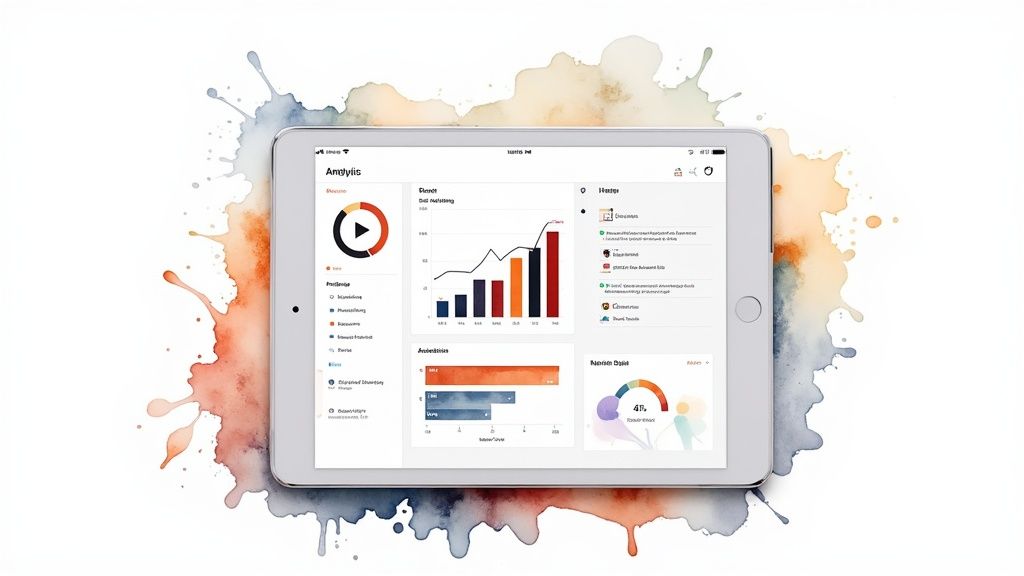
This is where AI demos really give salespeople a secret weapon. Modern platforms give you a behind-the-scenes look at how a prospect engaged with the demo. You can see exactly which features they clicked on, how long they spent on certain sections, and where they replayed a specific part.
This data is pure gold. It lets you craft follow-ups that are incredibly relevant instead of just another generic "checking in" email.
Did they spend a lot of time on your analytics dashboard? Your follow-up could be: "I saw you spent some time exploring our reporting features. On our call, I'd love to show you how other companies in [Their Industry] use that data to drive X% growth."
Did they rewatch the part about integrations? Try this: "It looked like our integration capabilities caught your eye. Are there specific tools like Salesforce or HubSpot you’re looking to connect with?"
This data-driven approach shows you’re paying attention and helps you tailor every single conversation to what the prospect actually cares about. AI demos handle the initial heavy lifting and education, so you can focus on what you do best: building relationships and closing deals.
If you're interested in putting this into practice, you can explore how Aidvize can help you implement this kind of AI demo strategy for your own team.
Common Questions About AI Video Demos
As sales and marketing leaders start looking at AI-powered tools, a few questions always seem to pop up. Moving from the way you've always done things to a more automated system can feel like a big step. Let’s tackle some of the most common concerns to give you the clarity you need to decide if AI is right for your video product demos.
How Much Technical Skill Do I Need?
Let's clear up a big myth right away: you don't need to be an engineer to create an AI demo. Far from it. Today’s AI demo platforms are built for go-to-market teams, not developers. Most have a simple, no-code setup where you record a core video and then just point and click to tag the elements you want to personalize—things like a company name, a logo, or a specific user's name.
The platform does all the heavy lifting in the background. Your team can be churning out hundreds of personalized demos in minutes, without ever writing a line of code. This lets them get back to focusing on their sales strategy instead of getting bogged down in technical tasks.
Are Interactive Demos Only for SaaS Products?
While interactive demos got their start and are incredibly popular in the SaaS world, they’re really for any product or service that's easier to show than to just talk about. If your solution has features or a workflow that needs to be experienced to be understood, an interactive demo is a game-changer.
We've seen this work across all sorts of industries:
Manufacturing: Imagine letting a prospect virtually operate the complex controls of a new piece of machinery.
Financial Services: You could walk a potential client through a sophisticated investment portal, letting them see exactly how it works.
Consulting: A great way to demonstrate a proprietary framework or methodology in action.
At the end of the day, if seeing is believing, an interactive demo is how you make believers out of your prospects.
How Can We Measure the ROI?
Figuring out the return on investment for an AI demo platform is actually pretty straightforward. You can track it with both hard numbers and some of the softer, but equally important, improvements you'll see.
On the quantitative side, you can directly track metrics like higher meeting booking rates from people who watched the demo, shorter sales cycles, and a real bump in your team’s win rates. And don't forget to add up the hours each rep saves on manual demo prep—that time adds up fast and translates into serious cost savings.
Qualitatively, the benefits are just as powerful. You’ll start noticing prospects are way more engaged on calls, leading to much more strategic conversations. When a prospect shows up to a meeting already knowing the basics, your reps can skip the generic pitch and get right into solving their specific, complex problems.
Will AI Demos Replace My Sales Reps?
This is probably the most critical question, and the answer is a firm no. AI demos are here to support your sales team, not make them obsolete. Their job is to automate the repetitive, top-of-funnel work of educating prospects and personalizing content at scale.
This frees up your best reps to do what they do best—the high-value work only a human can do. Things like building genuine relationships, digging into a customer's nuanced needs, and closing a complex deal. Think of AI demos as a powerful tool that makes your best people even better and more efficient.
Ready to see how AI-powered video product demos can genuinely change your sales process? With Aidvize, you can build intelligent, personalized, and interactive demos that pre-qualify leads and get your pipeline moving faster. Start turning interest into revenue today. Learn more and get started with Aidvize.
Article created using Outrank