A Go-to-Market (GTM) strategy is the master plan for how you take a product to market. Think of it as your company's playbook for launching something new, designed to give you a real edge over the competition. It’s what gets everyone—from sales and marketing to product and support—rowing in the same direction toward a single, unified goal.
Rethinking the GTM Strategy: It’s All About the Demo
Let's get straight to the point. Your GTM strategy isn't just a list of tasks for a product launch; it's the engine that drives your entire sales process. And what's the most crucial part of that engine? The product demo.
The sales demo is where the magic happens. It’s that make-or-break moment when your product’s value stops being an abstract concept and becomes a tangible solution. This is where a prospect's mild curiosity either blossoms into a serious intent to buy, or fizzles out completely. A solid GTM strategy framework is your guide, but its success is often won or lost in the demo.
For years, sales teams have treated the demo as a generic, one-size-fits-all presentation tacked on at the end of the sales cycle. That approach is broken. In today's crowded market, sales and GTM teams need to stop boring prospects with presentations that miss the mark. The most crucial part of the sale deserves a better approach.
A Modern, Demo-Centric Approach
The new way forward puts the sales demo right at the heart of your GTM strategy. The goal is to ditch passive slideshows and create interactive, personalized buying experiences that actually resonate with prospects. To achieve this, leading GTM teams are weaving AI and interactive tools directly into their sales motions.
This demo-centric model is built on a few core ideas:
Personalization at Scale: Imagine your sales reps tailoring every single product demo to a prospect's unique pain points and industry without spending hours on manual prep. That's the power of AI.
Interactive Discovery: Instead of just talking at them, let buyers get their hands on the product. Interactive demos empower them to click around, explore features, and discover the value for themselves.
AI-Powered Insights: Every click and interaction within a demo is valuable data. AI support can analyze this information to tell your sales team exactly what features resonate, helping them sharpen messaging and close the deal.
When you build your GTM strategy framework around what your sales team actually needs to win deals—a killer demo—you create a powerful and repeatable process. This isn't just about making prettier presentations; it's about leveraging AI to improve how sales are conducted and closing deals faster.
Don't just take my word for it. The data shows that companies with a structured GTM plan have a 10% higher success rate and see up to three times greater revenue growth. You can dive into the research on salesmate.io. This new model is all about making every single sales demo count.
Why Your Product Demo Is Sabotaging Your GTM Plan
Let's be honest. Your go-to-market plan might be a masterpiece on paper, but its success often comes down to one make-or-break moment: the product demo. For years, sales teams have relied on a demo process that is fundamentally broken. This isn't just about a bad presentation; this outdated approach actively undermines the very gtm strategy framework you’ve poured so much effort into.
The real problem is the "one-size-fits-all" mindset. Too many reps walk into a meeting with a rigid script, ready to march through a laundry list of features. They present the product the exact same way to a startup's CTO as they do to an enterprise marketing director, completely glossing over their wildly different problems and priorities.
This cookie-cutter approach is a fast track to a glazed-over audience. Prospects don't want a generic tour of your software. They need to see a clear solution to their specific headaches. When you force them to sit through irrelevant features, the connection is lost, and the deal stalls.
The Hidden Costs of Old-School Demo Prep
Beyond the strategic missteps, the sheer operational drag of traditional sales demos is staggering. The time reps waste on manual prep is a massive productivity killer. For every big demo, a rep can easily spend hours tweaking slides, begging engineering for a custom demo environment, and trying to guess what questions might come up.
This manual grind creates a huge bottleneck in the sales cycle. Instead of spending their time building relationships and closing deals, your most expensive sales talent is bogged down in admin work. It's an inefficient model that doesn't scale, and it directly hits your team's ability to meet its targets. This is a classic example of how sales demos could be improved with AI.
A flawed demo process doesn't just lose a single deal; it introduces friction across the entire revenue engine, slowing down sales cycles and inflating customer acquisition costs.
Personalization: The Missing Piece of the Puzzle
The single biggest failure of old-school demos is the lack of genuine personalization. A prospect has to be able to see themselves using your product to solve their daily problems. If your product demo can't build that mental picture for them, it has failed. This is the disconnect that prevents that crucial "aha!" moment.
Without that personal connection, your product is just a collection of abstract features. This is exactly where a modern gtm strategy framework demands a better way. To truly elevate the sales process, we have to move past static slideshows and embrace dynamic, buyer-focused experiences powered by AI.
Here’s how AI-supported interactive demos flip the script:
Automated Personalization: Imagine AI scanning your CRM to instantly customize an interactive product demo for a prospect's specific industry, role, and known pain points. It’s relevant from the first click.
Drastically Reduced Prep Time: Reps are freed from manual setup. They can launch a perfectly tailored sales demo on the fly, letting them focus on the strategic conversation, not the technical logistics.
Empowered Buyers: Interactive demos put the prospect in the driver's seat. They can explore the product at their own pace, zeroing in on the features that matter most to them. This self-directed discovery is far more engaging.
By finally ditching the old, broken model, GTM teams can turn the product demo from a common point of failure into their single most powerful conversion tool.
Building Your Demo-Centric GTM Framework
To truly win in your market, you have to build a precision-engineered sales machine. The most important gear in that machine? The sales demo. A demo-centric framework isn’t about just showing off features late in the game; it's about making your product demo the central, value-driving force throughout the entire buyer's journey.
It all starts with getting laser-focused on your Ideal Customer Profile (ICP), but through the lens of the demo itself. Don't just list their job titles. Ask yourself: what problem actually keeps them awake at night? What specific "aha!" moment in your product will make them see you as the solution? This deep, empathetic understanding is the bedrock for creating a demo that resonates.
Once you know who you’re talking to, you can map their path to purchase. Pinpoint the key moments where a demo can make a real difference. A first-time visitor to your website needs a quick, interactive product tour, while a C-suite executive in a final pitch needs a high-level, ROI-focused presentation. This mapping lets you serve up the right experience at just the right time.
Crafting Your Interactive Demo Playbook
The heart of a powerful demo-centric gtm strategy framework is a dynamic sales demo playbook. Forget static scripts. This is a collection of narrative pathways designed for different buyer personas and problems. Think of it as a ‘choose your own adventure’ for your prospects, where every path leads to a clear demonstration of value built just for them.
A solid playbook should break down:
Persona-Specific Narratives: A Head of Sales needs to see ROI and team productivity features right away. An IT Director will care more about security and integration.
Industry-Specific Scenarios: Show you understand their world. A sales demo for a healthcare client should use relevant terminology and data, which is completely different from what a retailer wants to see.
Use-Case Driven Paths: Guide prospects through workflows that directly tackle their stated goals, like "improving lead conversion" or "slashing operational costs."
This is where AI support for sales teams becomes a massive help. Instead of having reps guess which path to take, an AI engine can analyze CRM data and discovery call notes to instantly suggest the most effective demo narrative. Every presentation becomes hyper-relevant, keeping prospects engaged.
By building a playbook, you systemize personalization. You ensure every sales conversation is grounded in relevance, turning the demo from a simple presentation into a strategic, consultative experience.
A great playbook doesn't just improve live sales calls. You can repurpose snippets into interactive demos for your website, drop them into email campaigns, or send them as follow-up assets. This creates a consistent message no matter where a prospect engages with you.
GTM leaders are constantly trying to balance the cost of new tools and strategies against the benefits they deliver, as the infographic below shows.
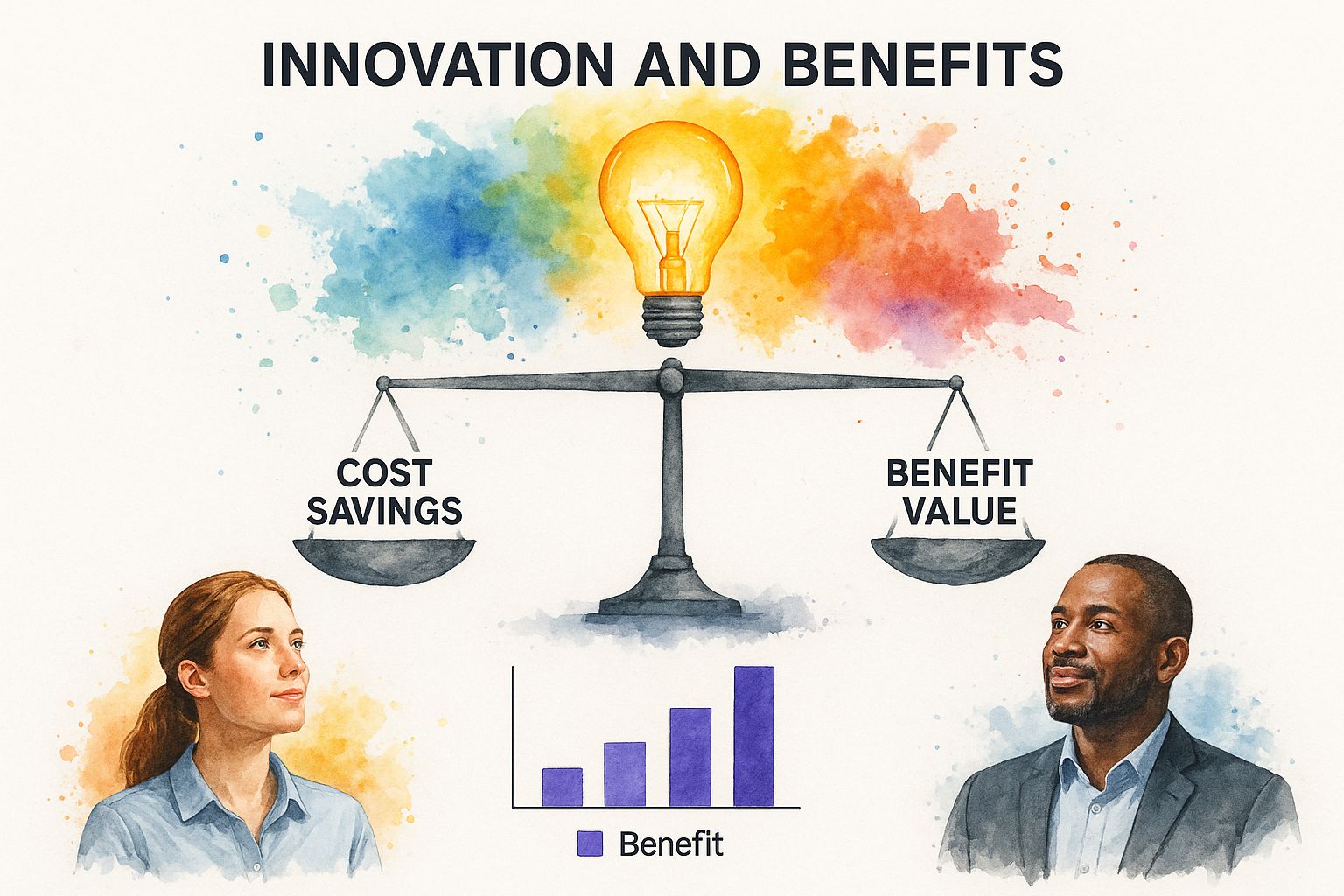
This balance is key. Investing in a tool like an AI-powered demo platform might seem like a big initial cost, but the value it brings through better sales efficiency and higher win rates often provides a massive return.
Speaking of AI, the difference between a traditional, one-size-fits-all demo and a modern, interactive one is night and day.
Traditional Demo vs Interactive AI-Powered Demo
Aspect | Traditional Demo | Interactive AI-Powered Demo |
|---|---|---|
Personalization | Generic, one-size-fits-all script. | Dynamically tailored in real-time based on buyer persona and pain points. |
Pacing | Rep-controlled, linear presentation. | Prospect-led, allowing them to explore features at their own pace. |
Data & Insights | Limited to rep’s notes and anecdotal feedback. | Gathers detailed analytics on user engagement and feature interest. |
Scalability | Relies 100% on sales rep availability. | Can be embedded on websites and in emails for 24/7 self-service. |
Follow-Up | Generic recap email. | Personalized follow-up based on demo interaction data. |
This shift transforms the sales demo from a passive monologue into an active, data-rich dialogue that empowers both the buyer and the seller.
Aligning Sales Execution with GTM Goals
Even the most brilliant playbook is useless if your sales team doesn't know how to run the plays. The final piece is aligning your team’s execution with your strategic goals. This means training reps to stop being presenters and start being expert guides on a personalized buying journey.
Here are a few best practices on how sales are conducting demos, and how they could be improved with AI:
Lead with Discovery: Use the first few minutes of a call to confirm pain points. That intel can then feed an AI engine to adjust the demo flow on the fly.
Master the Narrative Paths: Reps need to be fluent in the playbook’s scenarios so they can pivot smoothly based on a prospect's questions and reactions.
Use Post-Demo Analytics: After the call, AI can highlight which features resonated most. This is gold for crafting a follow-up that hones in on exactly what they care about.
This structured approach directly connects your big-picture GTM vision to what your reps are doing every single day. The data backs this up: companies with mature, segmented GTM strategies outperform competitors by about 4% in compound annual revenue growth and 6% in profit growth, mainly by using digital tools to connect with customers more effectively. You can learn more from BCG's research on emerging economies.
By making the product demo the star of your GTM show, you create a repeatable, scalable engine to win your market.
Using AI to Supercharge Your Sales Demos

Having a solid demo playbook is your foundation, but the real magic in any moderngtm strategy frameworkhappens during execution. This is where Artificial Intelligence stops being a buzzword and starts being a practical, deal-closing tool for your sales team.
AI isn’t here to replace your best sales reps. It’s here to give them superpowers. The goal is to turn every single product demo into a masterclass of personalization and persuasion, improving how sales are conducted at the most crucial stage.
Imagine your sales team walking into every demo with an intelligent co-pilot. This isn't just an assistant; it's a strategist that has already done the heavy lifting, sifting through data to craft a story that speaks directly to that prospect's biggest headaches. This is what AI support for GTM teams looks like today.
AI-Driven Personalization at Scale
The most obvious win with AI is delivering hyper-personalization without the manual grunt work. Traditional sales demo prep is a massive time-sink, with reps making educated guesses about what a prospect actually cares about.
AI flips that entire model on its head. It plugs directly into your team’s data sources and instantly analyzes everything.
CRM Data: It can pull the prospect’s industry, company size, and history of interactions to get the context right.
Discovery Call Transcripts: Using Natural Language Processing (NLP), it can pinpoint exact pain points and stated goals from earlier conversations.
Marketing Engagement: It sees which content they engaged with, giving you a clear window into their interests.
With this information, the AI automatically assembles an interactive demo that puts the most relevant features front and center. Instead of a generic product tour, the prospect immediately sees how you solve their problem. That’s how you get that critical "aha" moment in the first few minutes.
The AI Co-Pilot for Real-Time Coaching
Even the most seasoned reps can miss a subtle cue during a live sales demo. An AI co-pilot acts as a second set of eyes and ears, feeding the rep real-time guidance to keep the conversation on track. For any GTM team obsessed with sales effectiveness, this is a game-changer.
Think about what this looks like on a live call. The AI assistant can:
Provide On-Screen Prompts: If a prospect spends extra time on a specific feature, the AI might suggest a perfect customer story or ROI stat for the rep to share.
Detect Engagement Drops: By analyzing conversational flow, it can tell when a prospect is zoning out, prompting the rep to ask a question or switch gears.
Surface Battle Cards: The moment a prospect mentions a competitor, the AI can flash key differentiators and talking points on the rep’s screen so they’re never caught flat-footed.
This kind of AI support frees up reps to be more present and consultative. They can focus on building rapport and tackling tough questions, knowing their AI partner has their back.
Think of it as a seasoned sales manager whispering advice in your ear during the most critical moments of the demo. This intelligent support system elevates the performance of your entire sales team, from new hires to seasoned veterans.
Unlocking Actionable Demo Analytics
Perhaps the most strategic benefit of an AI-powered demo platform is the treasure trove of analytics it provides. After a product demo wraps up, the guesswork usually begins. What did they like? Where did I lose them?
AI replaces that speculation with hard data, creating a powerful feedback loop for your entire gtm strategy framework.
Modern demo analytics can track:
Feature Engagement: See exactly which parts of your interactive demo prospects explored, for how long, and in what order.
Key Question Triggers: Identify which features consistently spark the most questions or objections from buyers.
Sharing Patterns: See who the prospect shares the "leave-behind" interactive demo with, giving you a clear map of the buying committee.
This data is pure gold for GTM and product teams. Marketing can fine-tune its messaging to lean into the most popular features. Product gets direct insight into what the market truly values, helping shape the roadmap. And sales leaders can spot what works in winning demos and scale those best practices across the entire organization.
Getting the Most Out of AI-Powered Interactive Demos
Giving your go-to-market teams AI and interactive demo tools is a fantastic start, but the tech alone won’t get you to the finish line. To really see a return, you have to rethink your whole approach to the sales demo. The big idea is to move your reps from being presenters to becoming skilled guides who craft a personalized journey for each buyer.
This isn't just about learning which buttons to click. It's about training your team to use the technology as a conversational tool. Instead of sticking to a rigid script, they need to get comfortable using the dynamic nature of interactive demos to steer the conversation. This means getting good at navigating different story paths and pivoting on a dime based on what a prospect says or asks.
From Presentation to Conversation
The single most important change is shifting your team’s mindset. A traditional demo is a monologue. An AI-powered interactive demo, on the other hand, is a collaborative workshop where the buyer’s needs set the agenda.
To get your team there, sales leaders should concentrate on a few best practices:
Think in Story Branches: Train reps to see the demo as a series of "if-then" scenarios. If a prospect brings up scalability, the rep should immediately know which interactive path to follow to show off enterprise-grade features.
Listen to the AI Co-Pilot: Your reps need to trust the real-time prompts and insights the AI provides. These suggestions are based on data from thousands of successful demos, helping guide the conversation toward a yes.
Connect Features to Outcomes: Every click needs to be tied directly to a business result. Reps should be trained to stop saying, "This button does X," and start saying, "Using this workflow, you can cut onboarding time by 40%, just like [Similar Company] did."
Use Post-Demo Analytics for Smarter Follow-Up
The conversation isn’t over just because the video call ended. One of the most powerful parts of a modern gtm strategy framework is the mountain of data you get after the product demo is done. AI analytics give you a detailed map of what the prospect actually cared about.
Your follow-up should be a direct response to how the prospect engaged with the interactive demo. Sending a generic "just checking in" email is a huge missed opportunity when you have a blueprint of what caught their eye.
For example, if analytics show a prospect spent most of their time in your reporting section, your follow-up should include a case study about data-driven decision-making. If they re-watched the part about integrations, the clear next step is to offer a technical call. This targeted follow-up proves you were listening and keeps the momentum going.
Make it a Seamless Part of Your Tech Stack
For these demos to really work, they can't be off on an island. It's critical to make sure your interactive demo platform plugs right into your core GTM tools, especially your CRM. This creates a smooth, automated process that makes your data richer and your team more efficient.
When it's all connected, every interaction inside the demo can automatically update the contact record in your CRM. This gives everyone on the revenue team—from marketing to sales to customer success—the full story without manual data entry. That level of deep integration is what allows you to deliver a personal touch at scale. It's especially vital for complex growth, like expanding overseas. According to Harvard Business Review, a shocking 70% of companies fail when they expand internationally, often because they just copy-paste their domestic strategy. You can discover more insights about how a tailored GTM approach drives international success and avoid that trap.
The Demo That Keeps on Selling
Finally, one of the smartest things you can do is turn your interactive demos into powerful "leave-behind" assets. After the call, send your prospect a link to a personalized, self-guided version of the demo you just walked them through. This move is brilliant for a couple of reasons.
First, it lets your champion explore the solution again on their own time. More importantly, it makes it incredibly easy for them to share it with their colleagues. Your demo is now an internal salesperson, pitching your product to other decision-makers long after you've logged off. When the CFO asks about ROI, your champion can just forward the demo path you built specifically to highlight financial benefits. Suddenly, your product isn't just an option; it's the obvious choice.
Measuring the Success of Your New Demo Strategy
So, you've shifted to a demo-centric gtm strategy framework. How do you know if it's actually working? It’s easy to get caught up in tracking things like the sheer number of demos completed, but those are just vanity metrics. They don't tell you the real story.
The real proof is in the revenue. You need to connect the dots between your demo performance and business impact. When you can confidently show stakeholders how your interactive demos and AI support are shrinking deal cycles and boosting win rates, that’s when you’ve truly proven your ROI. This is about measuring effectiveness, not just activity.
Key Metrics for a Demo-Centric GTM
To get a clear picture of how your new strategy is performing, you need to zero in on a handful of metrics that truly matter. These KPIs bridge the gap between your sales team's product demos and your bottom-line results, creating a feedback loop for your entire GTM team.
Here's where I'd recommend you start:
Demo-to-Win Rate: This is your north star. It answers one simple question: "Of all the opportunities that had a demo, what percentage did we actually win?" If this number is climbing, it's a great sign that your personalized demos are hitting the mark.
Sales Cycle Length: A killer demo process should be a deal accelerator. Start tracking the average time it takes from the first sales demo to a signed contract. If that cycle is getting shorter, your reps are communicating value much faster.
Average Deal Size: When a prospect can truly visualize the full value of your solution in an interactive product demo, they often see more potential and are willing to invest more. An uptick in your average deal size is a strong indicator that your demos are doing a great job of upselling.
Prospect Engagement Scores: This is where modern interactive demos really shine. They give you granular data on what people are actually doing. You can track which features they click on, how much time they spend in certain areas, and if they finish the demo. High engagement is a fantastic leading indicator of a deal that's likely to close.
By analyzing which features prospects engage with most, your GTM and product teams gain invaluable, real-world data. This insight directly informs product roadmaps and refines marketing messages to focus on what truly matters to buyers.
This data-first mindset turns your sales demo from a simple presentation into a powerful intelligence-gathering tool. With AI-powered analytics, you can see exactly which talking points and features move the needle, allowing you to constantly refine your approach. You’re no longer guessing; you’re connecting every interaction directly to revenue and proving the value of your demo-centric gtm strategy framework with hard numbers.
Frequently Asked Auestions
What Exactly Is a Demo-Centric GTM Strategy?
Think of a demo-centric GTM strategy framework as flipping the traditional sales model on its head. Instead of saving the product demo for the very last step, this approach makes it the star of the show right from the start. It uses smart, interactive technology to weave personalized demo experiences throughout the entire buyer's journey.
Essentially, you're not just showing the product anymore. You're turning the sales demo into your main engine for engaging prospects, proving value, and ultimately, driving revenue. It's a shift away from those old, one-size-fits-all presentations and toward a dynamic conversation where the buyer is in the driver's seat.
How Does AI Actually Make a Product Demo Better?
AI gives your product demos a serious upgrade by injecting hyper-personalization. It can instantly analyze data about a prospect and automatically tweak the demo's content to focus on their specific pain points and goals. It’s like giving your sales team a co-pilot that ensures every single presentation hits the mark.
The real magic is what happens behind the scenes. AI can offer live coaching to sales reps during a demo and provide deep analytics on how prospects are engaging. This tells you exactly which features and talking points are landing, letting you fine-tune your entire GTM strategy with real data.
Plus, AI gets rid of the soul-crushing prep work. Your team can fire up a perfectly tailored interactive demo in a matter of seconds. This frees them up to have meaningful conversations instead of getting bogged down in manual setup. More time selling, less time prepping.
Can a Small GTM Team Realistically Pull This Off?
Absolutely. In fact, it might be one of their biggest advantages. Modern interactive demo platforms are designed to be intuitive and scalable, which makes them a perfect fit for teams of any size. The AI support for sales provides efficiency gains that help smaller teams punch well above their weight.
A small GTM team can get started by building out just a few core demo templates for their most important customer personas. The benefits become clear almost immediately:
Do More with Less: AI cuts down on the manual prep, freeing up your team's limited time.
Personalize Like a Pro: Deliver experiences that feel custom-made, even without a huge team.
Scale Your Reach: Embed interactive demos on your website or in campaigns to qualify leads around the clock.
This kind of technology really levels the playing field. It gives smaller companies the power to run a sophisticated sales demo strategy that, in the past, was only available to massive enterprises. By focusing on the quality of each interaction, a small team can make a huge dent in their sales pipeline.
Ready to stop presenting and start converting? With Aidvize, you can build AI-powered interactive demos that qualify leads and shrink your sales cycle. See how our conversational avatars can guide buyers to that "aha!" moment, giving your GTM team the fuel they need to close deals faster. Start building smarter demos today.
Article created using Outrank